What actually happens on a crewed catamaran charter in the Caribbean — day by day
6 min read · Caribbean sailing · Charter basics
If you’ve never been on a crewed catamaran charter before, it can be hard to picture what it actually looks like day-to-day. Most people have a vague sense that it involves a boat and warm water, but the details — how the schedule works, what the crew does, how meals happen, where you sleep — tend to be fuzzy.
This post walks through a typical day on a crewed catamaran charter in the Caribbean, so you know what to expect before you book.
First, what is a crewed catamaran charter?
A crewed charter means you’re renting a boat that comes with a professional crew — typically a captain and a chef/first mate. You bring your group (usually 2–10 people), and the crew handles the sailing, navigation, cooking, and logistics. You don’t need any sailing experience. You’re essentially a guest on a private yacht that moves to a new location every day.
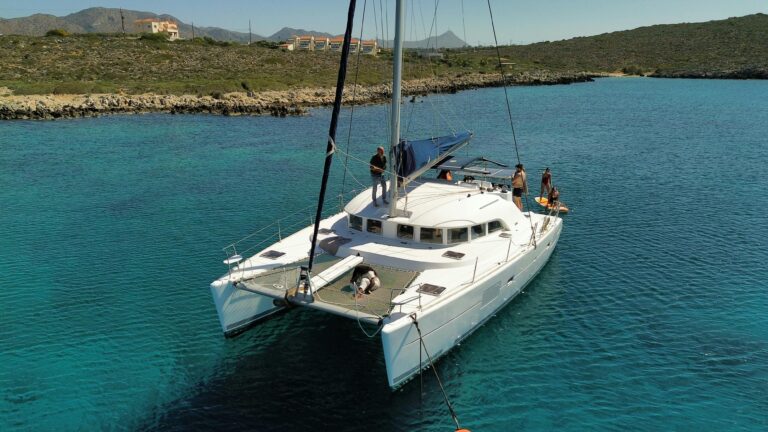
Catamarans are the most popular choice for Caribbean charters because they’re wide and stable — far less rocking than a monohull — with spacious deck areas and separate cabin hulls that give everyone real privacy. Most charter catamarans in the Caribbean range from 45 to 60 feet and sleep 6–10 guests comfortably.
Morning: the day starts at anchor
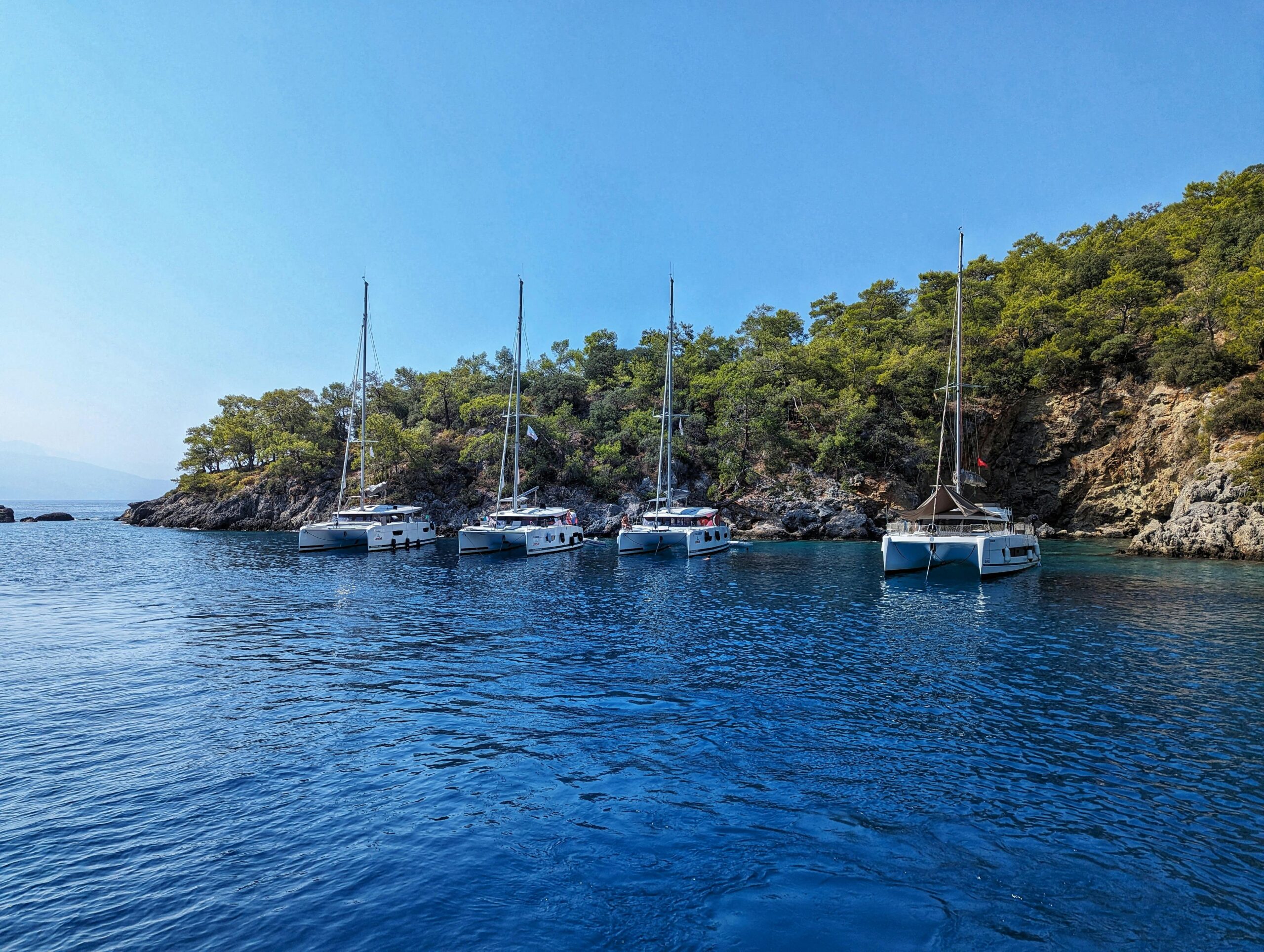
Most charters overnight in a protected anchorage rather than a marina. You wake up with the boat already in a quiet bay, usually somewhere you couldn’t reach any other way. Mornings are unhurried. The chef prepares breakfast based on preferences you’ll discuss at the start of the trip — dietary restrictions, favorites, that kind of thing.
While you’re eating, your captain is checking weather and finalizing the day’s plan. On most charters, the itinerary is flexible — you’ll have a rough route for the week, but the specific stops each day are decided based on conditions, your group’s interests, and what the captain knows about the area. A good captain will suggest stops you’d never find in a guidebook.
Midday: sailing and stopping
In the Caribbean, passages between islands are usually short — often one to three hours of sailing. The BVI, St. Martin, and the Grenadines are particularly good for this because the islands are clustered close together. You’re rarely stuck on a long passage when you’d rather be in the water.
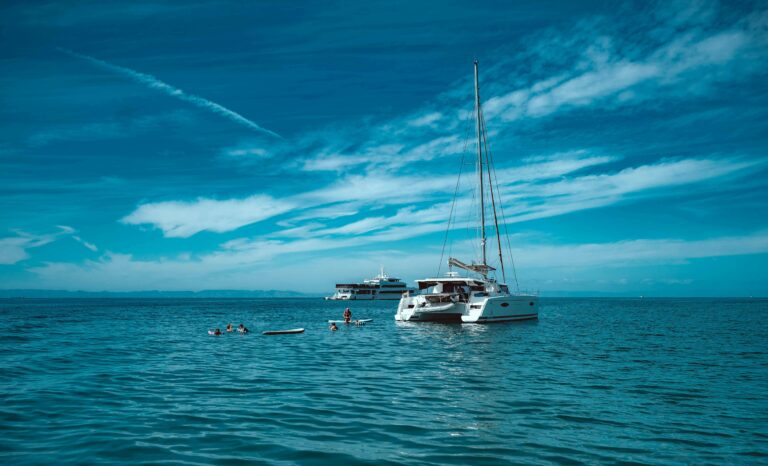
When you anchor at a new spot, most boats carry snorkeling gear, paddleboards, and kayaks as standard equipment. Some charters include water toys like inflatable slides or towable tubes. Lunch is usually served on the boat at anchor — somewhere scenic. If the group wants to go ashore for lunch at a beach bar, that’s easy to arrange too.
Afternoon and evening: the crew handles it
One thing that surprises a lot of first-time charter guests is how much the crew quietly takes care of provisioning, navigation, mooring, cleaning — it all just happens. By the time you’re done with your afternoon swim, the boat is tidy and your captain has found an anchorage for the night.
Dinner is typically the most social part of the day. On most crewed charters, the chef prepares a full dinner onboard most nights — three courses is common. You eat in the cockpit, usually at anchor in a calm bay. Some groups choose to go ashore to a local restaurant a couple of nights, which the captain can arrange.
A few things worth knowing before you book
There are a few practical things that help set expectations going in:
All-inclusive vs. plus expenses. Most crewed charters are quoted as “plus expenses” — meaning food, drinks, and fuel are paid separately through an Advanced Provisioning Allowance (APA). Some charters are genuinely all-inclusive. Make sure you know which you’re booking.
The crew lives on the boat too. The captain and chef typically have their own cabin in one hull. It’s not unusual, but it’s worth knowing — especially on smaller boats.
The typical charter week runs Saturday to Saturday, though shorter charters of 5–6 days are available depending on the region and time of year.
How to find the right crewed catamaran charter
Most crewed catamaran charters in the Caribbean are booked through a yacht charter broker. Brokers have access to hundreds of boats and crews, and a good one will match you based on your group size, budget, destination, and what kind of experience you’re after — they’re not just salespeople, they tend to know the boats personally.
At CatamaranMatch, we connect people planning Caribbean catamaran vacations with specialist brokers who can help them find the right boat. Answer a few questions about your trip and we’ll send your details to a broker who fits your needs — no spam, no pressure, just a warm introduction.